
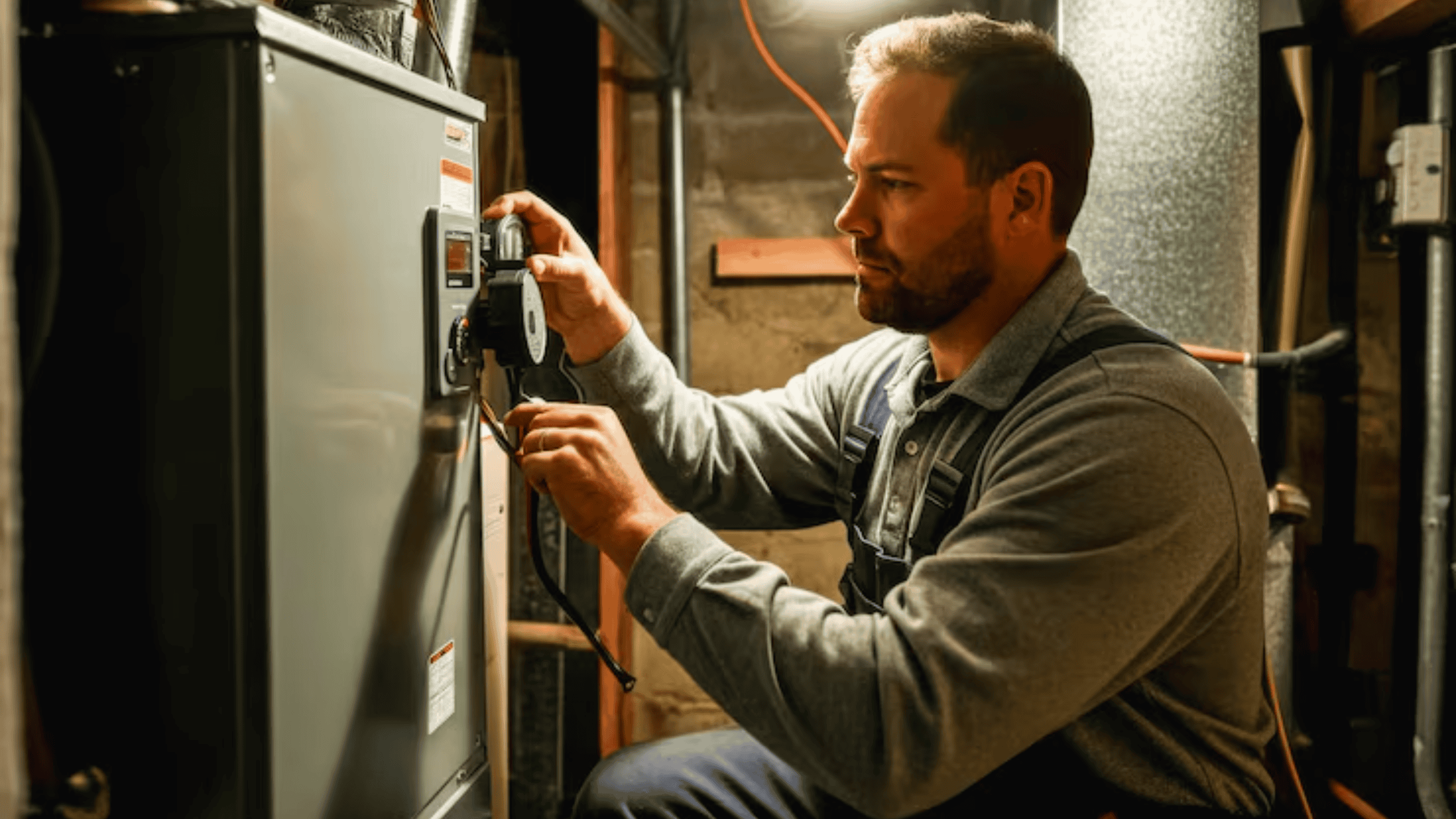
When an older furnace starts requiring repairs, homeowners often face an important financial decision. Paying for another repair may seem like the cheaper option, but continuing to invest in an aging heating system can become expensive over time. On the other hand, replacing a furnace requires a larger upfront investment.
The decision between furnace repair and furnace replacement should therefore be based on more than the immediate repair bill. Furnace age, repair history, energy efficiency, operating costs, reliability, and remaining heating system lifespan can all affect which option makes better financial sense.
When Is Furnace Repair the Better Choice?
Furnace repair can be a sensible option when the system is relatively young, has been properly maintained, and the problem is limited to a specific component. A professional repair may restore reliable heating without requiring the larger investment associated with installing a new system.
For example, replacing a worn component or correcting a relatively minor mechanical or electrical problem may extend the life of the furnace for several more years. If the system is otherwise operating efficiently, repairing it can be a practical choice.
The overall condition of the furnace is important. A homeowner should consider whether the current problem is an isolated issue or part of a pattern of repeated failures. If the furnace has generally been reliable and the expected furnace repair costs are reasonable, repair may provide better short-term and long-term value.
When Does Furnace Replacement Make More Financial Sense?
Furnace replacement may become a better financial decision when an older system requires frequent repairs, operates inefficiently, or is approaching the end of its expected service life. Older furnaces can experience more component failures as parts wear down over time.
A major repair can also change the calculation. If a furnace requires an expensive component replacement and other parts are showing signs of wear, spending more money on the existing system may only delay the need for a new furnace.
Homeowners should also consider the age of their system. ENERGY STAR recommends considering replacement for furnaces that are more than 15 years old, particularly when they are experiencing frequent problems or increasing energy costs.
How Furnace Repair Costs Compare With Replacement
Comparing repair and replacement requires looking at both immediate and future expenses. Furnace repair generally has a lower upfront cost, while replacement requires a larger initial investment but may provide benefits over many years.
A repair can make financial sense if it resolves the problem and the furnace continues operating reliably. However, repeated service calls, replacement parts, and unexpected breakdowns can gradually increase the total cost of keeping an older system.
This is why homeowners should look beyond the current repair estimate. Consider how much has already been spent maintaining the furnace, how often it has required service, and whether another repair is likely to provide several more years of dependable operation.
How Energy Efficiency Affects the Decision
Energy efficiency is another important consideration when deciding whether to repair or replace an older furnace. Modern heating equipment can offer higher efficiency than many older systems, potentially reducing the amount of fuel required to heat a home.
Furnace efficiency is commonly measured using an Annual Fuel Utilization Efficiency, or AFUE, rating. A higher AFUE rating means that more of the fuel’s energy is converted into usable heat.
If an older furnace has a relatively low efficiency rating, replacing it with a more efficient model may help reduce heating energy consumption. However, the potential savings depend on factors such as the existing furnace’s efficiency, home size, insulation, ductwork, energy usage, and local energy prices.
For this reason, energy efficiency should be considered alongside repair costs rather than used as the only reason to replace a functioning furnace.
Does Furnace Age Matter?
Furnace age can have a significant effect on the repair-versus-replacement decision. A newer furnace that develops an isolated problem may still have many years of useful service remaining, making repair a reasonable option.
An older furnace presents a different situation. As equipment gets closer to the end of its expected heating system lifespan, the likelihood of additional repairs can increase. A repair may solve the current problem without addressing other aging components.
This does not mean every older furnace needs to be replaced immediately. Instead, homeowners should look at age alongside reliability, maintenance history, efficiency, and the cost of the required repair.
How Frequent Repairs Affect Your HVAC Investment
Repeated repairs can change the financial value of an older furnace. One small repair may not be concerning, but several service calls within a short period can indicate that the system is becoming less reliable.
Frequent repairs also make heating expenses less predictable. Homeowners may find themselves paying for one component replacement only to discover another problem later. Over several years, these costs can approach the price of investing in a newer system.
A furnace replacement can provide a more predictable long-term heating solution. Although the initial cost is higher, a new system may reduce the need for repairs and provide improved efficiency and reliability.
Should You Consider Other HVAC Upgrades?
A furnace does not operate independently from the rest of a home’s heating system. Ductwork, insulation, ventilation, thermostats, and other components can affect how efficiently heat is distributed throughout the property.
When replacing an older furnace, homeowners may also have an opportunity to consider related HVAC upgrades. For example, improving insulation, addressing ductwork problems, or upgrading the thermostat may help the new heating system operate more effectively.
However, not every upgrade is necessary for every home. The best approach is to identify the factors that are actually affecting comfort and energy performance before adding additional costs to the project.
The Role of Regular Gas Furnace Service
Regular maintenance can help homeowners make better decisions about furnace repair and replacement. Professional gas furnace service can identify worn components, performance problems, airflow issues, and other concerns before they become larger problems.
Maintenance can also provide a clearer picture of the condition of an aging furnace. If a technician identifies several components that are deteriorating, the homeowner can compare the cost of addressing those issues with the cost of replacing the system.
Regular service does not prevent every breakdown, but it can help maintain system performance and identify potential problems earlier. It can also help homeowners avoid making a rushed replacement decision during an unexpected heating failure.
When Is a Major Furnace Repair Worth It?
A major repair deserves careful consideration when the furnace is older. The cost of the repair should be compared with the system’s current condition and expected remaining service life.
If the furnace has been reliable, has received regular maintenance, and the repair addresses a specific issue, paying for the repair may still be worthwhile. However, if the system has already experienced multiple failures, another major repair may provide limited long-term value.
Homeowners should ask whether the repair is likely to give them several more years of reliable service. If the answer is uncertain, comparing the repair with a new furnace can help clarify the financial decision.
When Is Furnace Replacement the Better HVAC Investment?
Replacement may make more sense when an older furnace combines several warning signs. Frequent repairs, rising heating bills, inconsistent temperatures, declining performance, and major component failures can all indicate that continued investment in the existing system may not be economical.
A new furnace also provides an opportunity to select equipment that is appropriately sized and more efficient for the home. Proper installation is particularly important because even an efficient furnace may not perform as expected if it is incorrectly sized or installed.
The goal should not be to choose the most expensive heating system available. Instead, homeowners should look for a system that balances upfront cost, energy efficiency, reliability, maintenance requirements, and expected service life.
How to Calculate the Long-Term Cost
A simple comparison can help homeowners evaluate their options. Start with the estimated cost of repairing the existing furnace. Then consider how long the repair is expected to extend the system’s useful life and whether additional repairs are likely.
For replacement, consider the total installation cost along with expected energy consumption, maintenance, and future repair requirements. Comparing these costs over several years provides a more realistic picture of the financial value.
For example, a lower-cost repair may be attractive if it provides several more years of reliable operation. But if the repair only delays an inevitable replacement for a short period, investing in a new furnace may provide better long-term value.
Furnace Repair or Replacement: Which Should You Choose?
There is no single answer for every homeowner. Repair is often the better option when the furnace is relatively young, the problem is straightforward, and the system remains reliable and efficient.
Replacement becomes more attractive when the furnace is older, repairs are becoming frequent, efficiency is declining, or a major component has failed. In these situations, continuing to spend money on an aging system may not provide the best return on your HVAC investment.
A professional assessment can help determine whether your current furnace has enough useful life remaining to justify another repair or whether replacement is the more practical home heating solution.
What Should You Ask Before Replacing Your Furnace?
Before choosing a new furnace, homeowners should understand why replacement has been recommended and what alternatives are available. Ask about the condition of the existing system, the expected cost of repair, and how long the furnace may reasonably continue operating.
It is also useful to compare the efficiency rating, installation requirements, maintenance needs, warranty, and expected operating costs of replacement options. Getting more than one professional opinion can also help homeowners understand whether replacement is necessary and what type of system is appropriate.
The objective should be to make an informed HVAC investment based on the home’s heating requirements rather than simply replacing a furnace because it has reached a certain age.
Conclusion
Deciding between furnace repair and furnace replacement depends on your furnace’s age, repair costs, efficiency, and remaining lifespan. While a minor repair may be the most practical option, frequent breakdowns, rising energy bills, and an aging system can make replacement a better long-term investment.
Homeowners should compare current furnace repair costs with the potential benefits of a newer, more efficient heating system. Considering reliability, energy efficiency, and future maintenance needs can help you make a confident decision. Contact Five Star Heating for professional guidance and help choosing the right heating solution for your home.
Frequently Asked Questions
1. Is it cheaper to repair or replace a furnace?
Repair is usually cheaper upfront, especially when the furnace is relatively new and the problem is minor. However, replacement may provide better long-term value when an older furnace requires frequent or expensive repairs.
2. How do I know if my furnace needs to be replaced?
Frequent repairs, rising energy bills, inconsistent heating, unusual operation, declining performance, and major component failures can indicate that furnace replacement should be considered.
3. Is it worth repairing a 15-year-old furnace?
It depends on the condition of the furnace and the repair required. A minor repair may still be worthwhile, but a major repair on an older system should be compared with the cost and benefits of replacement.
4. Can furnace replacement reduce energy costs?
A newer, higher-efficiency furnace can potentially use less fuel than an older, less-efficient model. Actual savings depend on the existing system, replacement efficiency, home insulation, ductwork, heating habits, and energy prices.
5. How often should a gas furnace be serviced?
Regular professional maintenance can help identify developing problems and maintain furnace performance. Following the manufacturer’s maintenance recommendations and arranging professional service regularly can help support reliable operation.